Drinking Water in England
Drinking Water
England 2025
14.48 billion litres per day
99.97% compliance
2.702 - CRI score for England
Zero major events
Dr Marcus Rink OBE
Chief Inspector of Drinking Water

Set out in this report are the key facts about the quality of the public water supplies in England, which is served by 24 water companies delivering supplies to 59.74 million consumers
Compliance with the drinking water standards is consistently high in England. Testing is designed to verify drinking water quality at practicable intervals at key supply system locations.
Under the Regulations, drinking water should be 'wholesome' meaning it does not contain any microorganism, parasite or substance at a concentration or value that exceeds limit values or would constitute a potential danger to human health. 5,377 of 236,341 tests reported by the local authorities in England in 2025 failed to meet one or more of the standards for wholesomeness.
Compliance with the drinking water standards is consistently high in England. Testing is designed to verify drinking water quality at practicable intervals at key supply system locations. The Inspectorate uses the CRI to measure the impact of a compliance failure on company performance, and the potential impact of those compliance failures on consumers.
The source of lead in drinking water is mainly communication pipes owned by water companies and supply pipes owned by consumers within their property which are made from lead. The Inspectorate wishes to work more closely with the industry lead steering group to increase the quality of data captured during failure investigations.
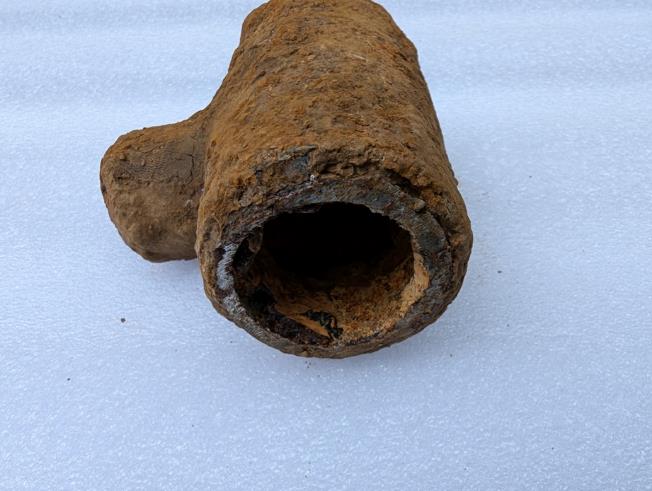
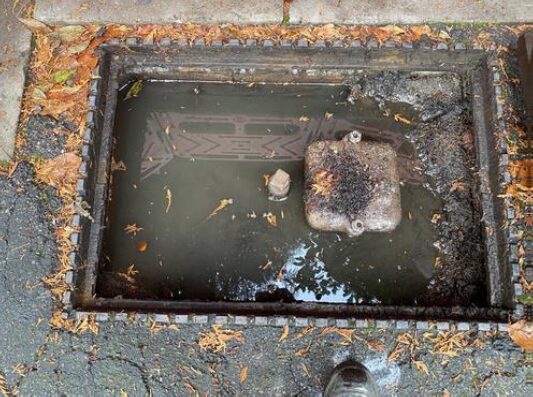
Water companies are required to notify the Inspectorate of any event which, by its nature has, or is likely to, adversely affect the quality or sufficiency of the water supplied to consumers.
The DWI use the Event Risk Index (ERI), which measures the impact of any events and the potential consequence on consumers as well as understanding the actions taken by the company in response. The ERI is designed primarily for the purposes of effective regulation, ensuring appropriate scrutiny is directed to those areas of greatest relative risk.
There were 47 water quality events attributable directly to poor asset health and plant failure, including 30 microbiological contamination events and 17 structural failures of the treatment works, tanks, or reservoirs
The Inspectorate undertakes an annual programme of technical audits to provide independent assurance that water companies are effectively managing risks to drinking water quality. These audits form a key part of regulatory oversight and enable the Inspectorate to examine how companies design, operate and maintain their systems to protect public health.
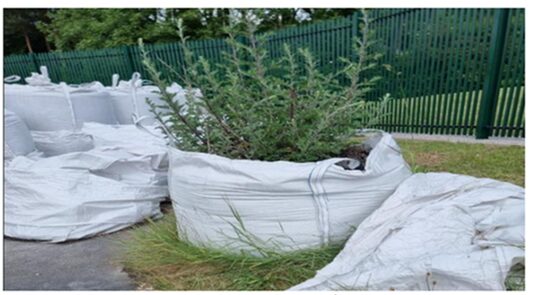
the Inspectorate undertook an industry wide programme of technical audits focused on the management of air valves across water companies in England and Wales.
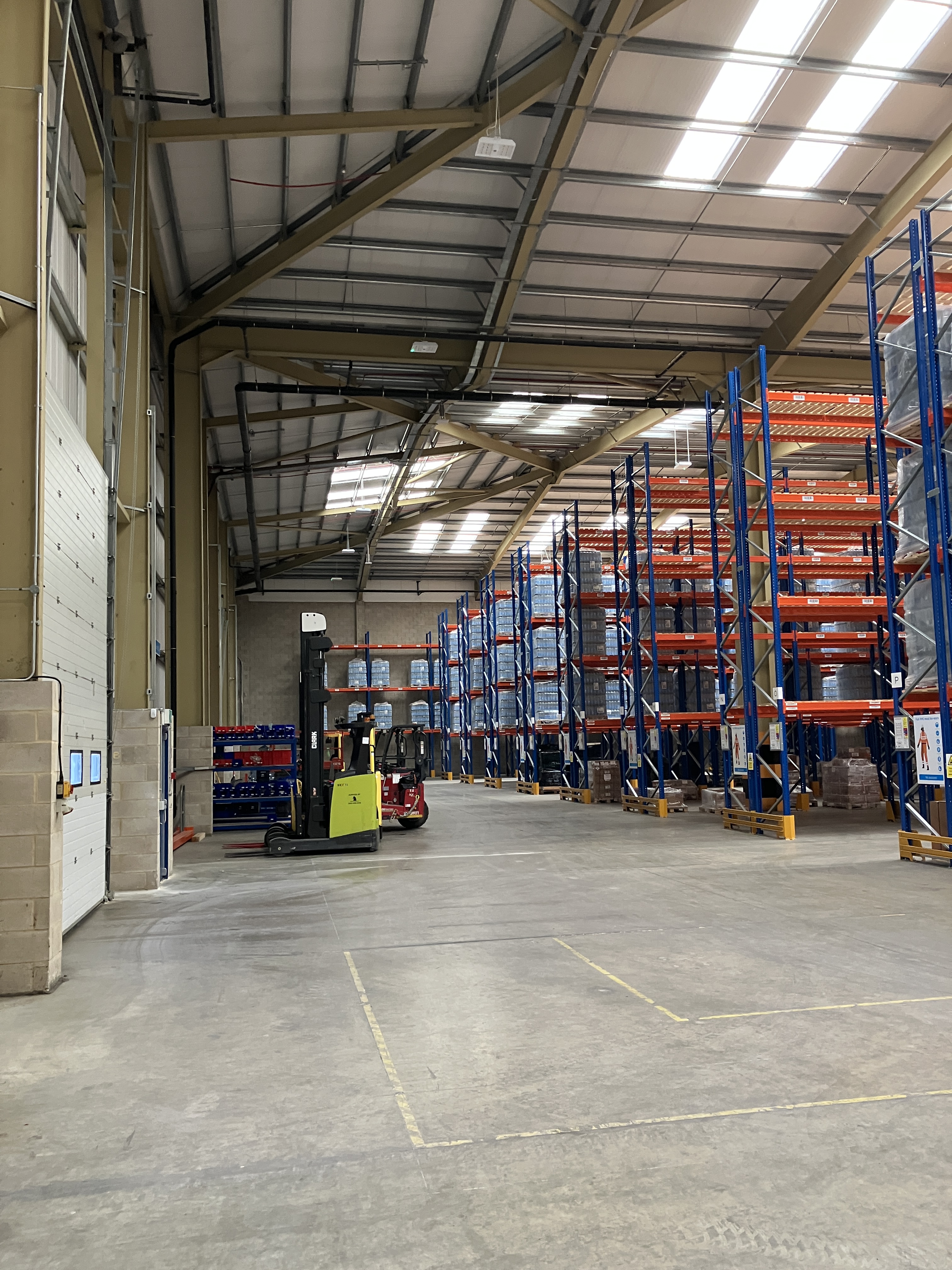
The Inspectorate audited several bottled water storage and distribution facilities, as well as company procedures for deploying bottled water during incidents
Recommendations are the Inspectorates primary method for undertaking enforcement action. They are issued to water companies when the Inspectorate identifies a failure to meet the statutory requirements of the Water Supply (Water Quality) Regulations 2016, or when the Inspectorate identifies a risk to public health.
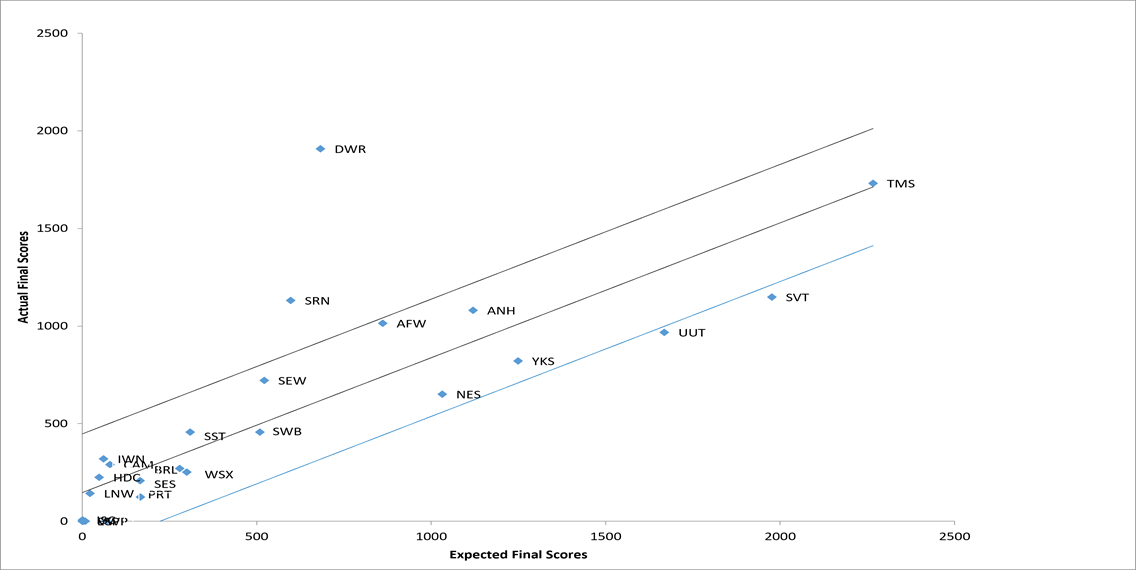
RRI measures all companies’ performance in recommendations against the industry. Recommendations are the first level of regulatory intervention. Regression analysis can be seen as the central black line. A position below this line means a company is receiving fewer recommendations and/or lower scores attached to those recommendations than would be expected.
The acceptability of drinking water is ranked by consumers as their top priority, and can be affected by several factors including its appearance for example, discolouration or aerated, or the taste and/or odour.
PFAS are a group of manmade compounds, the basis of which are chains of carbon and fluorine atoms. They contain at least one fully fluorinated methyl or methylene group. The carbon-fluorine bond is very strong and so these compounds do not degrade easily in the environment.
The Inspectorate has a range of enforcement powers which we utilise to compel companies to ensure that drinking water is of the highest quality and the systems in place to ensure its quantity and quality are sufficiently resilient.
Regulation 31 prevents water companies from using substances that could affect drinking water quality, including chemicals and construction products from source to delivery.
As well as undertaking its regulatory duties the Inspectorate receives a large number of enquiries, complaints and data requests each year. There has been an exponential increase in the number of enquiries received by the Inspectorate over the last 5 years.
Scan the QR code to complete a short survey about today's presentation. Your views help us improve how we communicate our work.